
Technical guide · 3 min read
How Tile Leveling Systems Work
Understand the roles of tile leveling clips, wedges, pliers and spacers, and prepare a compatible component set for a professional installation.
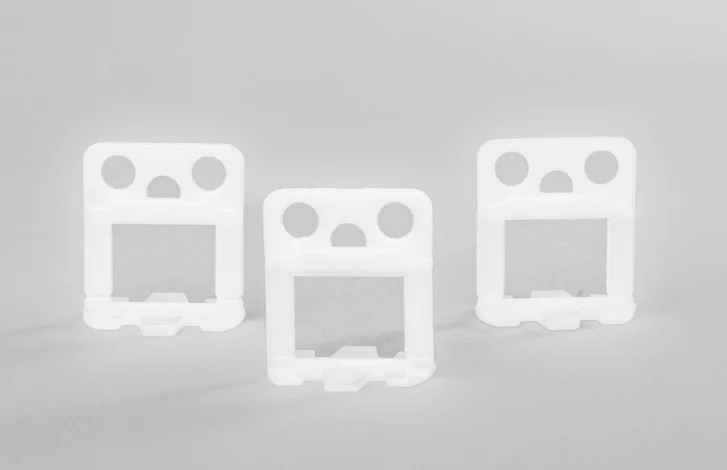
Tile leveling systems assist with the relationship between adjoining tile edges during installation. Understanding each component helps buyers assemble an appropriate set and helps installers ask the right compatibility questions. The system should be selected alongside the tile and installation method.
FIRST METAL presents clips, wedges, applicator pliers and tile spacers as four separate accessory families. Their roles are related, but they are not interchangeable.
Understand the component roles
In a clip-and-wedge arrangement, the clip sits at the tile junction and receives the wedge. The wedge applies controlled restraint across the adjoining tiles, while compatible pliers help insert it consistently. Spacers address the joint layout and remain a separate selection. RUBI's DELTA guide provides an example of these component roles. Its stated tile-thickness ranges, tool settings and proprietary parts belong to that system and are not specifications for the FIRST METAL families.
Technical reference: RUBI: DELTA leveling-system component and installation guide
Separate edge alignment from substrate preparation
A leveling accessory should not be used as a substitute for an approved substrate or setting-material preparation method. Before starting, the installer should confirm that the substrate, tile and adhesive combination is ready for the intended installation. Raising or restraining adjacent edges does not by itself prove correct support beneath the tile. Keep checks of the tile assembly separate from checks that the wedge and clip appear seated. This distinction makes the system easier to use without expecting it to solve every installation issue.
Confirm the set before purchasing
Send the tile thickness and format, intended joint layout and installation environment with the enquiry. Ask whether the proposed clips, wedges and pliers are designed to work together. A similar appearance or matching colour is not evidence of compatibility. Request the selected system's instructions, including supported tile range and removal method. The current family records intentionally do not assign a universal joint width, tile-thickness range or plier pressure setting from the supplied images.
Use a representative trial area
Agree a small trial using the actual tile, adhesive and proposed components. Follow the selected system's placement and tightening instructions and inspect the tile surface for marks. Confirm how joints will be kept clear and how the installer will assess the tile support. The trial should establish a repeatable method before a large area is installed. If the component behavior differs from the approved instructions, stop and resolve the issue rather than compensating with additional force.
Plan consumption and handover
Ask which components are consumable and which can be reused in the selected system. Estimate quantities from the approved tile layout and placement method, rather than using an invented universal clips-per-square-metre rate. Keep packaging quantities and site quantities distinct in the order. At completion, verify that component removal and joint preparation followed the chosen instructions before subsequent work. Record the component references so a distributor's replenishment order does not inadvertently introduce an incompatible item.
- Tile thickness, format and joint layout.
- Compatible clip, wedge, plier and spacer references.
- Approved placement, tightening and removal instructions.
- Consumption based on the actual layout and confirmed pack quantities.
Frequently asked questions
Are tile spacers the same as leveling clips?
No. Spacers establish joint spacing; leveling clips work within an edge-alignment assembly. Confirm the role of each component in the selected installation system.
Can any wedge be used with any clip?
Do not assume compatibility from appearance. Confirm the proposed clip, wedge and applicator combination and test it with the actual tile.
Discuss your project detail
Send the profile reference, application, drawings and quantity requirements. Include the points from this guide that need confirmation for your project.
Technical references and scope
Product-specific information comes from the linked FIRST METAL catalogue records. External manufacturer examples explain principles; their dimensions, ratings and compatibility are not transferred to FIRST METAL products.
- RUBI: DELTA leveling-system component and installation guide
Clips, wedges, controlled tightening and adhesive curing. RUBI compatibility ranges and marketing guarantees are not adopted.
Products for this detail
Tile Leveling Clips
Clips sit at tile joints with their base beneath adjacent tile edges. Used with a compatible wedge, they help control relative edge height while the tiles are installed. Select the clip to suit the tile build-up and intended joint.
Enquire about this product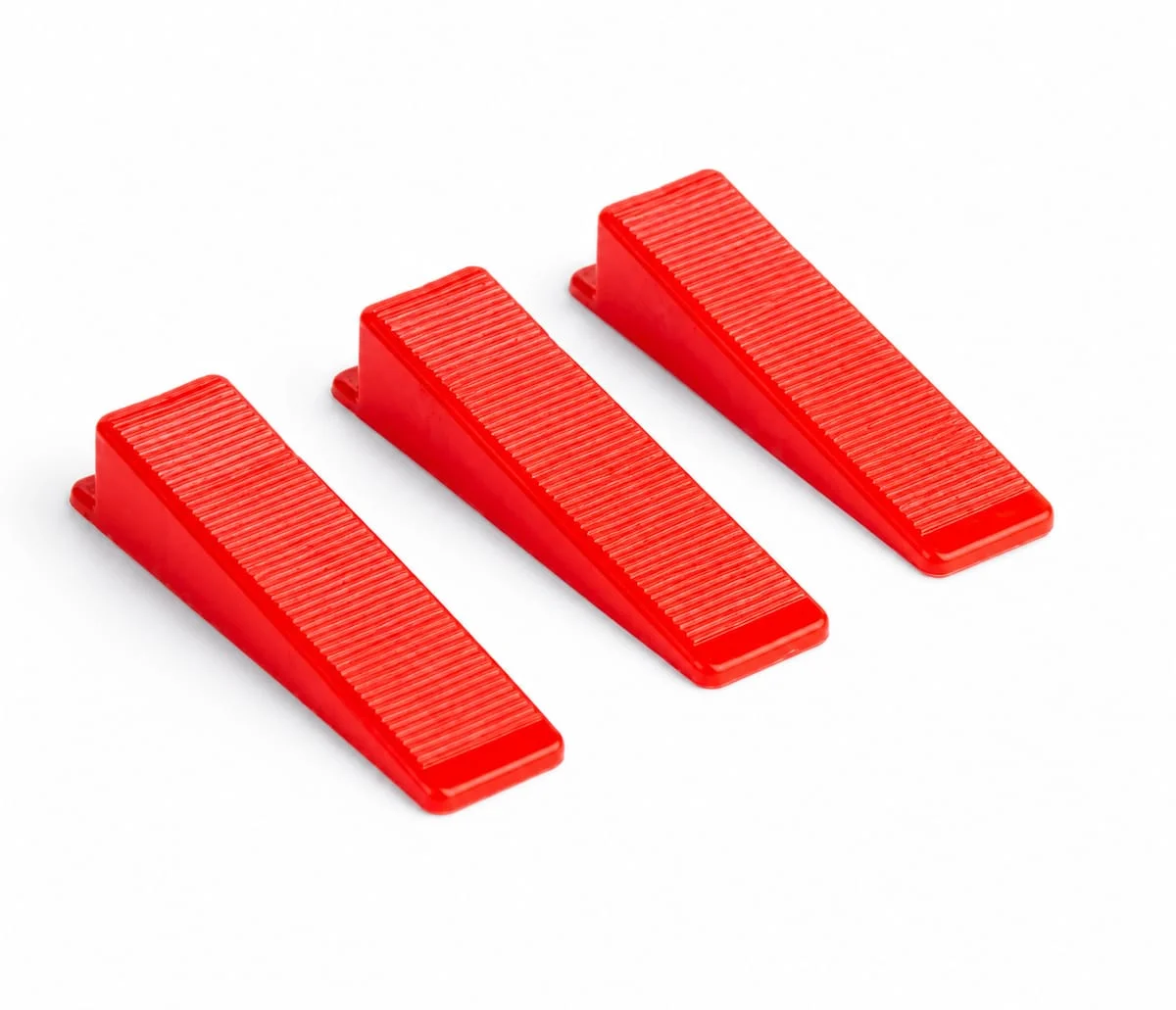
Tile Leveling Wedges
A tapered wedge passes through the opening of a compatible leveling clip to assist adjacent-tile alignment. The supplied reference shows toothed wedges; their dimensions and engagement must match the selected clip system.
Enquire about this product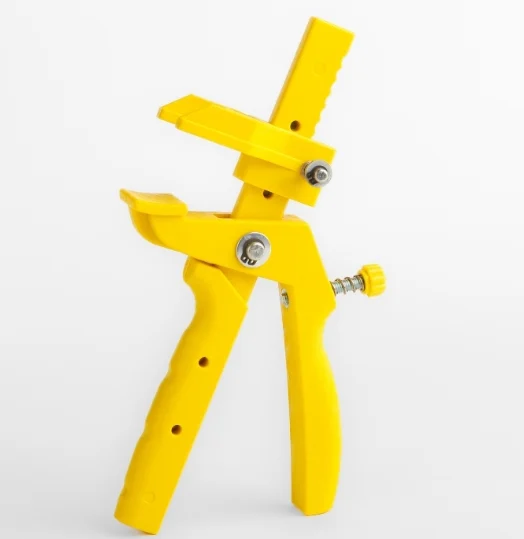
Tile Leveling Pliers
Applicator pliers assist wedge insertion and adjustment in a compatible tile leveling system. Tool selection depends on the component design and installation orientation; the illustrated tools are references for a specification enquiry.
Enquire about this product
Tile Spacers
Conventional cross spacers help maintain spacing between adjacent tiles. They serve a different purpose from leveling clips: they guide joint layout and do not apply clip-and-wedge pressure to align tile faces.
Enquire about this productContinue reading
Installation planning · 3 min read
Common Tile Leveling Installation Mistakes
Review preparation, component compatibility, tightening, curing and removal mistakes before using a tile leveling system on a professional project.
Selection guide · 3 min read
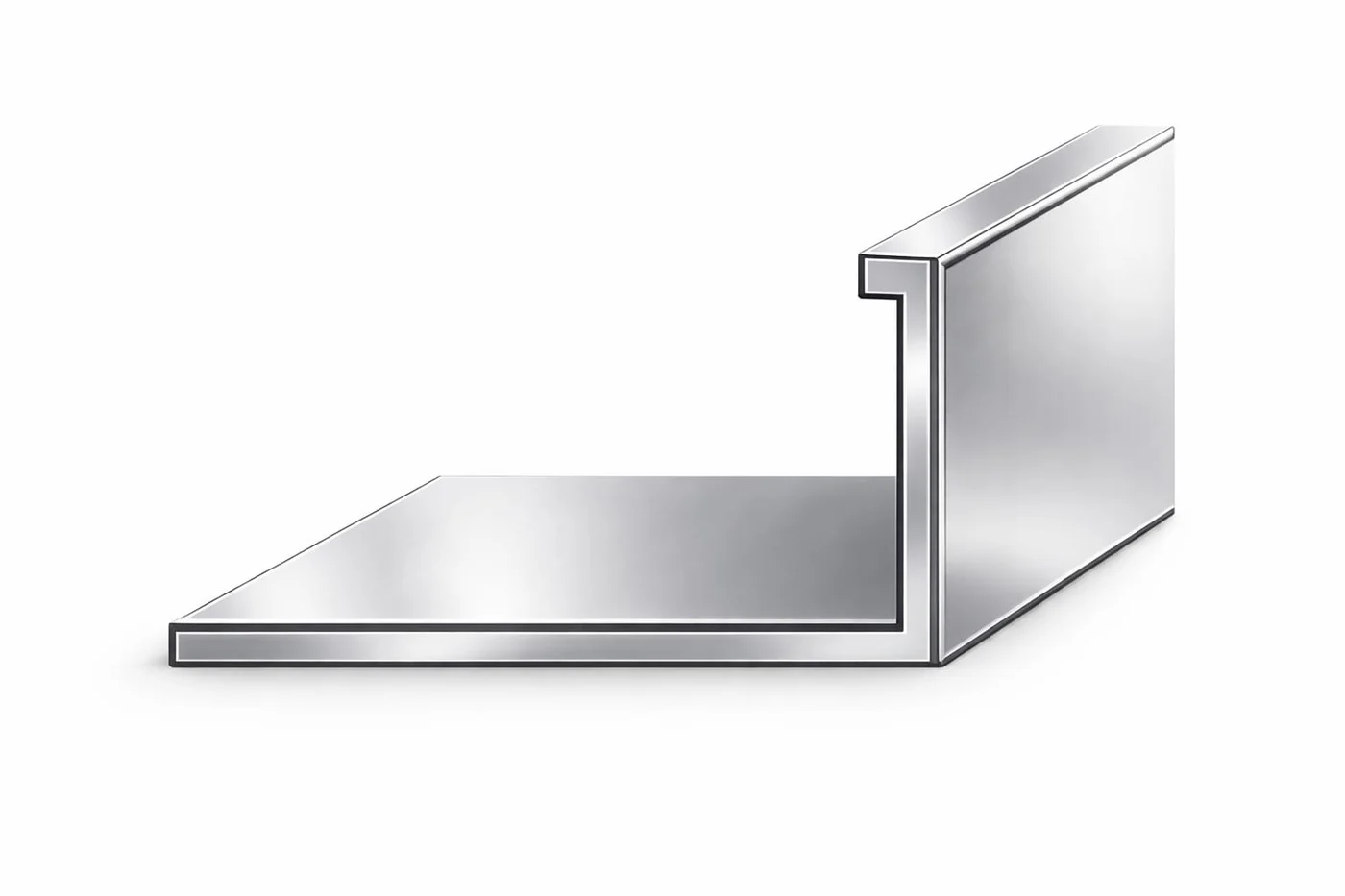
How to Choose the Right Aluminium Tile Trim
Choose aluminium tile trim by tile build-up, visible edge, anchoring detail and environment. Prepare the right information for a specification enquiry.
Installation planning · 3 min read
Planning Profiles for Floors, Stairs and Balcony Edges
Prepare floor-transition, stair-nosing and balcony-edge enquiries using the actual build-up, exposure and junction detail, without assuming performance ratings.